Table of Contents
Learning to cook with all your senses
The art of cooking was originally and purely to nourish the body. It is thought that when primitive humans cooked food over a fire it increased the amount of energy that their digestive systems could extract from the food and enabled them to evolve uniquely large brains in proportion to their body size. Large brains require a lot of energy, more energy than we would have been able to obtain from a raw diet. Perhaps we owe more to cooking than we first thought. Leaning to cook with all your senses

The story of spice has similar utilitarian origins to the story of cooking. Spices were initially valued for their medicinal and preservative properties. Records of the use of spices can be found in ancient manuscripts such as the the Bhagavad Gita and the Old Testament. Archaeologists have even found embalming spices in Egyptian tombs dating to around 3,000BC. It is plausible that spices were used long before this.
Coming from the England I grew up seeing spices as dried powders; typically brown, yellow and red in colour. Occasionally I would notice dried, unground spices. Visiting the Tropical Spice Gardens in Penang was the first time I came face to face with spices in their freshest form- still growing. Originally only fresh spices were used in food however people began to dry spices for the purpose of trade. Dried spices last longer, are lighter and easier to transport.
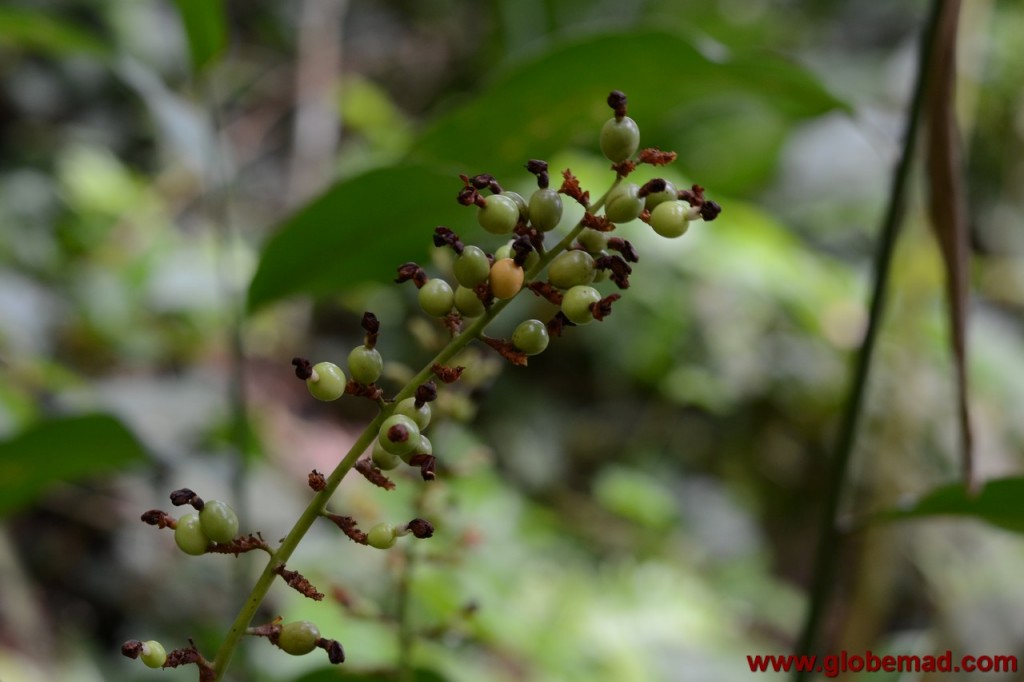
As we explored the quaint winding paths of the Tropical Spice Gardens, we were encouraged to look at, smell and taste various spices and leaves. There seems to be no common theme in the origins of the wide range of spices we use. Some are seeds, some are bark, some are berries and others are roots. Some come from plants, some from vines and others grow on trees. This makes spices hard to classify based on their botanical origins. Many definitions of spices therefore focus on the way that spices are used or on the purpose of their use.
It is a fascinating fact that although spices were originally used medicinally in the superstitious pre-scientific era we now know that most commonly used spices have a wide range of beneficial pharmacological properties. Cinnamon,for example, has antibacterial, anti-inflammatory and antioxidant properties. It has also been shown to reduce cholesterol levels and prevent harmful blood clots from forming. Turmeric contains a compound called curcumin which is a very effective anticancer drug. It is thought to prevent colon cancer and skin cancer by removing carcinogens (substances that cause cancer) and helping repair damaged DNA. Turmeric is also of interest for its potential for preventing Alzheimer’s disease. There are many more examples of spices having medicinal properties.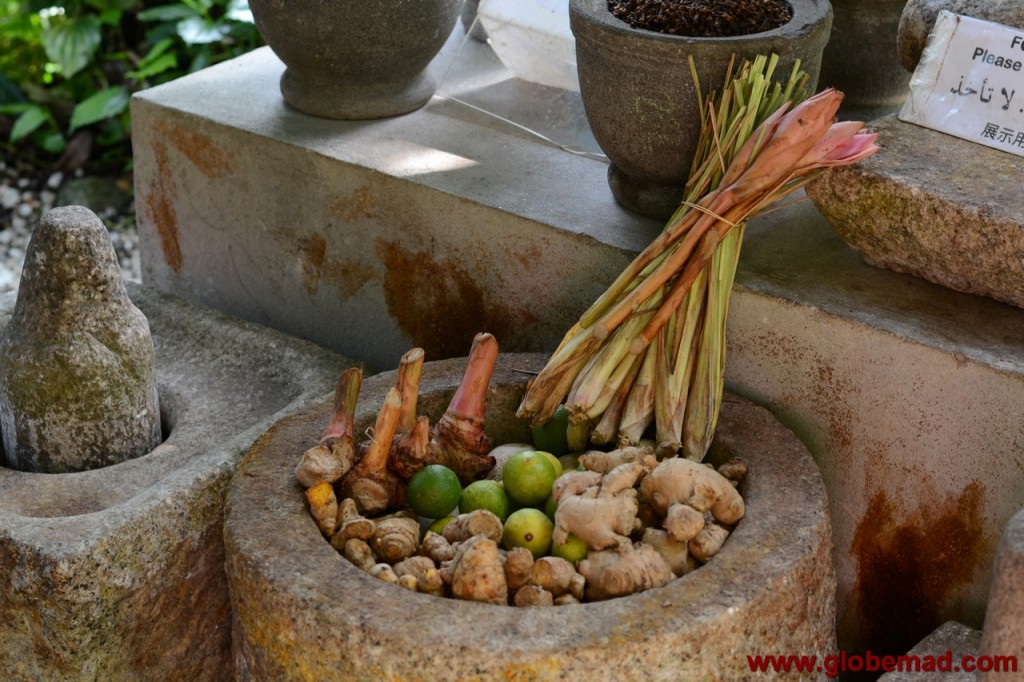
As we wander through the spice gardens our guide hands round some small green leave to chew. To my surprise the taste is overwhelmingly sweet. This is Stevia; it is 200-300 times sweeter than cane sugar and is used as a natural sweetener. Another leaf made my mouth feel fresher than mint could. This time I had been given a small young leaf from a pepper vine. This was truly shaping up to be a multi-sensory experience. As we were guided around the tropical spice gardens I was astounded at the power of spices and to be honest quite alarmed about some of the things I didn’t know. I wanted to spend hours more learning from the guide, I truly had so little idea about the story of spices.
Ready, steady… cook!
Armed with our new knowledge of spices we were ready to start the cooking class. Welcomed by a sweet team we were introduced to the kitchen and given our aprons, which they later let us keep as a gift. 
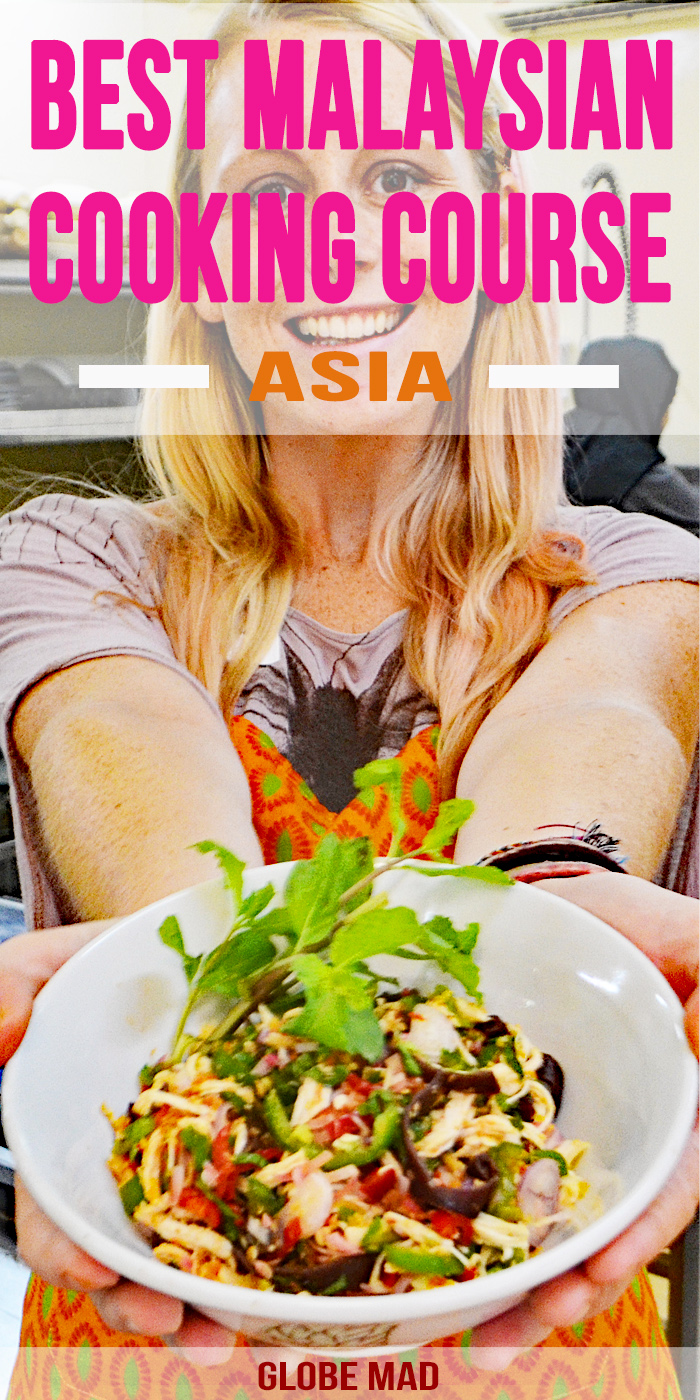
We started with a desert called Creamy Red Bean Porridge. We so rarely use beans for sweet food in the west, yet they works exceptional well in the way they hold flavor and add texture. The starter by contrast was a fresh, crisp and crunchy salad packed with powerful spices to give it an impressive kick. Black Fungus salad can include shredded chicken depending on your taste. In addition to leaves, red onion and tomatoes, you add belacan (dried shrimp flakes), chilli, and torch ginger to begin building a unique Malaysian flavor. Our main dish was a preparation intensive meal known as Hong Kay also known as Nyonya Braised Chicken. The chicken is marinaded in a delicious sauce made up of dark soy, crushed garlic and onion and spices, fried and then cooked in a claypot with water. Over time a beautiful thick sauce forms as the chicken cooks.

Nonya cooking isn’t about following a recipe, it is about engaging all your senses with the cooking process to achieve and end goal. Most Nonya dishes are about balancing flavors; salty, sweet, bitter and spicy. Colour, smell, taste all indicate how much to add and how long to cook for. You learn so much more than a few recipes on this course. Our teacher opened up about her own journey into becoming part of a Baba Nonya family.
Who are the Nonya people?
Nonya people are the female descendants of Chinese settlers in Malaysia who arrived between the 15th and 17th century as trade between China and Malaysia flourished. The male descendants are called Babas, but they tended to stay well away from the kitchen! When the Chinese immigrants arrived they would often intermarried with Malays. Over time the Chinese and Malay culture has fused into a beautiful synergy becoming a unique culture of its own. Nonya food is a wonderful example of this synergy; Chinese recipes have been supplemented with local spices and ingredients to make some of my favorite dishes in the world.

The moment I had been waiting for. Time to sample the food. Like a child at a buffet, I excitedly went straight for the dessert. It was served warm and had a beautifully creamy coconut flavor. Next, to the salad. Wow! The flavors are hard to compare to anything else. Tangy, spicy, aromatic and slightly sweet… and now for the chicken. The thick brown sauce has a deep rich sweet caramelized flavor complemented by the spices. The chicken was well cooked and tender. This was one meal I won’t forget.

For more information on The Tropical Spice Gardens and the Cooking Course visit the site:
www.tropicalspicegarden.com
www.tsgcookingschool.com/
A Heritage of Food
Food is a central and essential part Penang’s culture. It is given the status of a food capital for a very good reason. However, as you find with a lot of internationalisation, things are been watered down. There is an incredible Penang Heritage Cook Book that preserves and shares the foods and cooking style that are so unique to Penang. It’s a bit pricey, but then it is so unique and equips you to cooking distinctively epic and unique food at home. When I’m back in England, Malaysian is my favourite go-to-impress food for friends!
Good Accommodation can be tricky to find in Malaysia
It’s definitely there, it’s just tricky to find in some places and often booked up in popular places. Even if you don’t book you can use Agoda to check out the areas you are most likely to find it in. We’ve made a list of the most likely places you will visit with a link to accommodation, sometimes it is nice to just get somewhere booked and know its done….
Book your bed in Kuala Lumpur HERE (See the Petrona Twin Towers )
Book your bed in Penang HERE (See the George Town and Turtle Beach)
Book your bed in Langkawi HERE (Swim, snorkel and explore the Island)
Book your bed in The Perhentian Islands HERE (To learn to dive and snorkel)
Book your bed in Taman Negara HERE (See the worlds oldest rainforest)
Book your bed in The Cameron Highlands HERE (See Tea plantations and the strawberry farm)
Book your bed in Kinabalu HERE (To climb Mount Kinabalu)
Get A Guide
A really hope these blogs help, but If you feel happier with a full guide, Rough Guide are pretty good. I always think you don’t want more than a ‘rough guide’ as it is about making it your own adventure! They have a pretty cheap kindle copy as well as the actual book.






Leave a Reply